The MYTHENOR encyclopedia
Tupi-Guarani Mythology and Brazilian Folklore
Who they were
When Europeans arrived in 1500, Tupi-Guarani-speaking peoples lived along the entire Brazilian coast and across large areas of the interior, from the mouth of the Amazon to the Río de la Plata. They farmed cassava and maize, fished, and navigated rivers and seas. They are not a people of the past: the Guarani Mbya, Kaiowá and Ñandeva, the Tupinambá of Olivença, the Tenetehara and many others live today in Brazil, Paraguay, Argentina and Bolivia, with their languages, prayers and stories. This region of the Codex also gathers Brazilian folklore, born where Indigenous knowledge, Iberian traditions and African heritage met. Part of it was recorded by Jesuits and colonial chroniclers such as Anchieta and Gândavo, always through European eyes; another part by folklorists such as Câmara Cascudo and Monteiro Lobato. That is why each entry says where each figure comes from: Indigenous tradition, mestizo folklore, or the imagination of MYTHENOR.
Cosmology
There is no single Tupi cosmology: each people has its own. Among the Guarani Mbya, Nhanderu, the first father, emerges in the primal darkness, fed by the hummingbird, and creates the earth; other divinities keep the cardinal directions, and Tupã, lord of waters and thunder, dwells in the west. The Apapocuva-Guarani narratives recorded by Curt Nimuendajú in 1914 speak of a world already destroyed by a flood and of the search for the land without evil, yvy marã e'ỹ, which drove great migrations. In many accounts the Sun and the Moon are twin brothers whose mother was killed by celestial jaguars. The sky is also a calendar: constellations such as the Rhea, the Tapir and the Old Man mark the seasons of rain and drought, planting and harvest. In Brazilian folklore, the forest and rivers have masters, such as the Caipora and the Curupira, and enchanted beings live in cities beneath the waters.
Pantheon
Nhanderu is the creator of the Guarani Mbya. Tupã, whose name means thunder, rules rain and lightning; the Jesuits used his name to translate the Christian God. The Sun, kûarasy or Kuaray, and the Moon, îasy or Jasy, are in many narratives twin brothers, both male; the names Guaraci, Jaci and Rudá as a trinity come mainly from Couto de Magalhães in 1876 and are debated. Anhangá protects hunted animals and was turned into a demon by missionaries. The Curupira and Caipora guard the forest; the Iara, the Boiúna and the Boto reign in the waters. From the colonial encounter came the Saci, the Headless Mule, the werewolf, the Corpo-Seco and many rural hauntings.
In MYTHENOR
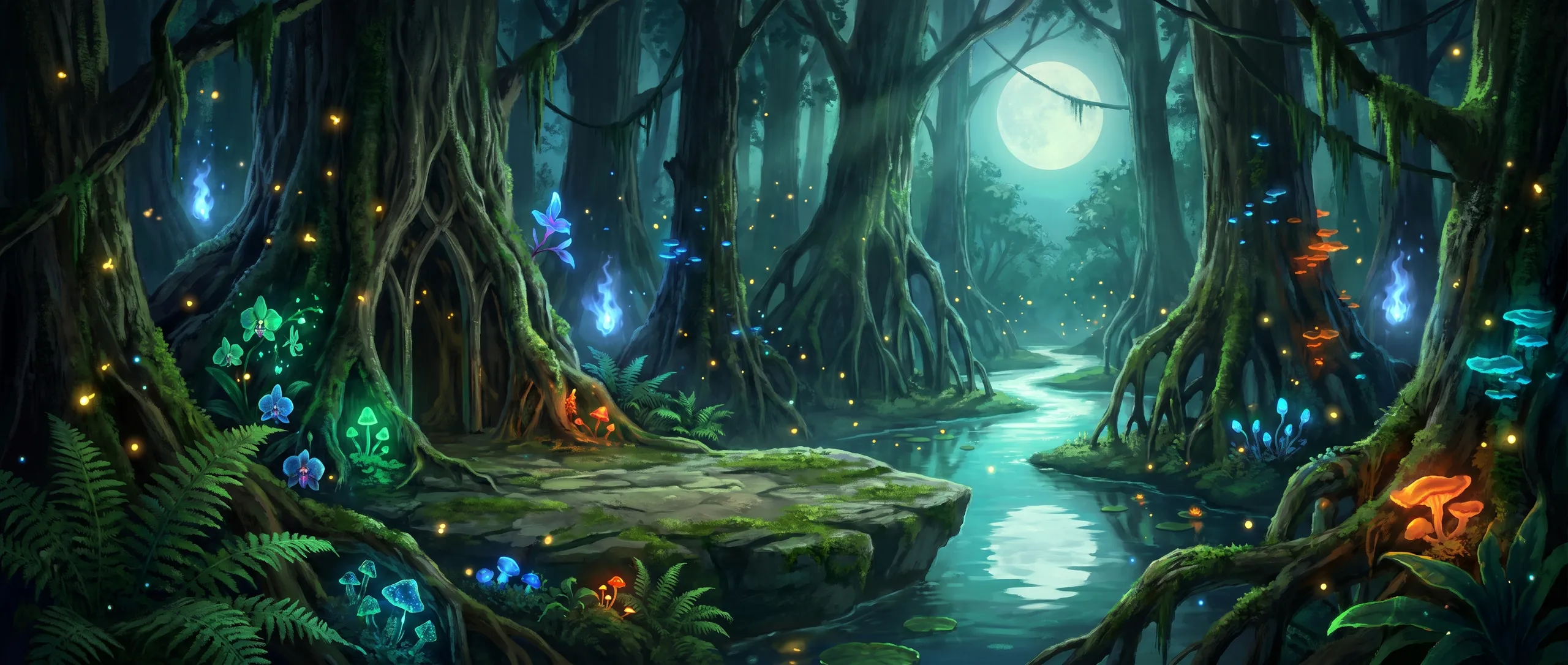
In MYTHENOR this is the Heart of the Forest region, under the Sky of Jaci, woven from songs, fireside tales and respect for the encantados. Asking the forest's permission is law. The guardian Jaci-Miri keeps the moon thread in the Mother Kapok, and the playable heroine is Potira Emberbow. The silence is coming: the encantados fall quiet, the river forgets its course, and even the Headless Mule weeps because no one fears her anymore. The region's ancient rhymes create the Boitatá and the Mapinguari, and the Deep Forest Under Jaci's Moon field strengthens Spirits and Beasts against fire.
A note on respect
The Tupi, Guarani and many other Indigenous peoples of Brazil are alive, and so are their traditions. Pajés, prayers, songs, the maracá, tobacco and body painting are sacred and belong to each people, with their own rules; in the game they appear as a tribute and never as a description of real rituals. Many cards are MYTHENOR creations inspired by animals, places and customs, and each entry says so clearly. Colonial and nineteenth-century records, such as those of Jesuits and Couto de Magalhães, carry European views and should be read with care. To go further, listen to Indigenous peoples themselves, their organizations, schools and artists.
Sources
- Tupí-Guaraní — Encyclopaedia Britannica
- Guarani Mbya — Povos Indígenas no Brasil — Maria Inês Ladeira / Instituto Socioambiental
- As lendas da criação e destruição do mundo como fundamentos da religião dos Apapocúva-Guarani — Curt Nimuendajú
- A religião dos Tupinambás e suas relações com a das demais tribos tupi-guaranis — Alfred Métraux
- Dicionário do Folclore Brasileiro — Luís da Câmara Cascudo
- Constelações indígenas: o céu Tupi-Guarani — Invivo — Museu da Vida, Fiocruz
The 120 cards
- Boitatá, Serpent of Fire
- Mapinguari, the One-Eyed Guardian
- Tupã, Lord of the Primordial Thunder
- Iara, Mother of the Waters
- Wyrm of the Great Falls
- Pantanal Caiman-Dragon
- Serra do Mar Lightning Wyrm
- Wildfire Dragon
- Black Igapó Dragon
- Hollow-Trunk Boa
- Vine Snake
- True Coral Snake
- Deep-Forest Bushmaster
- Creek Water Snake
- Norato, the River Serpent
- Smoke-Serpent of the Wildfire
- Ancestral Anaconda of the Deep Lagoon
- Uirapuru of the Enchanted Song
- Scarlet Macaw of the Cliff
- Urutau, the Ghost Bird
- Thunder-Winged Hummingbird
- Harpy Eagle of the High Canopy
- Enchanted Uirapuru, the Song That Stills the Forest
- Matinta Perera as the Shroud-Tearer
- Hawk of Tupã's Thunder
- Sun-Macaw, Keeper of the Sunset
- Genipap-Painted Warrior
- Archer of the Wide-River Village
- War-Canoe Paddler
- Sacred War-Club Thrower
- Seventh Son of the Full Moon
- Guardian of the Macaw Feathers
- Village Fire Captain
- Honorato, the Man Who Was a Serpent
- Full-Moon Jaguar
- Guardian Tapir of the Creek
- Fierce Peccary of the Deep Forest
- Giant Anteater
- Cerrado Maned Wolf
- Ancestral Giant Sloth
- Capelobo, the Anteater-Snouted Beast
- Jaguaretê, the Eclipse Jaguar
- Anteater, King of the Termite Mounds
- Clay-Masked Jaguar Warrior
- Caiman-Man of the Pantanal
- Caboclo d'Água, the River Guardian
- Ipupiara, the Sea Demon
- Werewolf of the Friday Night
- Saci-Pererê
- Mother of Gold
- Naiá, the Girl Who Loved the Moon
- Enchanted One of the Riverbed
- Wailing Soul of the Old Range
- Curupira, Guardian of the Forest
- Caipora, Mistress of the Beasts
- Saci of the Whirlwind
- Messenger of the Dawn
- Daughter of the Thunder
- Jaci, the Moon
- Rudá, Warrior of Love
- Guaraci, the Sun
- Corpo-Seco of the Backlands
- Rooftop Pisadeira
- Haunt of the Drowned Manor
- Charred Wraith of the Bonfire
- Faceless Rider of the Dirt Road
- Procession of Souls
- Howler of the Ridge
- Corpo-Seco's Withered Tree
- Pajé of the New-Moon Herbs
- Matinta Perera, the Whistling Witch
- Rue-Branch Folk Healer
- Pipe-Smoke Sorceress
- Seer of the Still Waters
- Pajé in Trance with the Enchanted
- Marajoara Ceramic Sentinel
- Living Totem of Sacred Wood
- Walking Clay Oven
- Soapstone Guardian
- War Canoe of a Hundred Oars
- Living Anthill
- Water-Winged Morpho
- Full-Night Firefly Swarm
- Deep-Burrow Tarantula
- Iron-Rooted Constrictor Vine
- Victoria Lily, Star of the Waters
- Headless Mule
- Enchanted River Dolphin
- Anhangá, Protector of the Hunted
- Boiúna, the Great Serpent
- Folk Healer's Herbal Tea
- Breath of the Wildfire
- Chant that Wakes the Forest
- Whistle to the Beasts
- Eye of the Full Moon
- Whisper of the Vine Thicket
- The Curupira's Backward Tracks
- Wisdom of the Village Elders
- Dance of the Festival Masks
- The Boto's Charm
- Tupã's Thunderbolt
- Fury of the Sacred Flood
- Shield of the Mischievous Saci
- Mud that Swallows the Aggressor
- Water-Mirror of the Lagoon
- Root that Drains Strength
- Living Vine Barrier
- Piranha Shoal
- Smoke of the Pajé's Pipe
- Judgment of Tupã's Thunder
- Sacred-Wood War Club
- Jaguar-Fang Necklace
- Macaw-Feather Headdress
- The Pajé's Maracá
- Jade Muiraquitã
- Deep Forest Under Jaci's Moon
- Friday Crossroads Rite
- Riverside Midsummer Dance
- Rite of the Forbidden Hunt
- Rite of the Great Flood