The MYTHENOR encyclopedia
Aztec Mythology (Mexica/Nahua)
Who they were
“Aztecs” is the popular name for the Mexica, a Nahuatl-speaking people who, by their own tradition, left Aztlán and founded Tenochtitlan around 1325 on an island in Lake Texcoco, in the Valley of Mexico. In under two centuries, allied with Texcoco and Tlacopan, they built Mesoamerica’s largest empire, until the Spanish conquest in 1521. They inherited much older ideas — from Teotihuacan, the Toltecs of Tula and other Mesoamerican peoples, including the Maya. They saw the world as fragile, sustained by the constant effort of gods and humans: the sun needed offerings to keep moving, and time had to be renewed. We know these beliefs from painted codices, the archaeology of the Templo Mayor and works like the Florentine Codex, written in Nahuatl with Indigenous scholars under the direction of Friar Bernardino de Sahagún.
Cosmology
According to the Legend of the Suns, the world passed through four ages, each with its own sun, and all ended in catastrophe: jaguars, hurricanes, a rain of fire and a flood. The present age is the Fifth Sun, Nahui Ollin, “4 Movement,” born at Teotihuacan when humble Nanahuatzin leapt into a bonfire; it too will end, in earthquakes. The earth was made from the body of a primordial monster, Tlaltecuhtli or Cipactli, torn apart by Quetzalcóatl and Tezcatlipoca. Above lay thirteen heavens; below, the nine levels of Mictlán. One’s fate after death depended on how one died: warriors and women who died in childbirth escorted the sun; the drowned went to Tlalocan; most made the long journey to Mictlán. Time was counted with two calendars — the 260-day ritual count and the 365-day solar year — which realigned every 52 years, when the New Fire was lit.
Pantheon
The Mexica pantheon is vast and fluid: gods unfold into several faces and trade attributes. Quetzalcóatl, the Feathered Serpent, is god of wind, learning and the creation of humans; his rival and partner Tezcatlipoca, the Smoking Mirror, rules night and fate. Huitzilopochtli, solar war god, was the Mexica patron, and Tláloc, lord of rain, shared the top of the Templo Mayor with him. Chalchiuhtlicue reigns over rivers and lakes; Coatlicue is the earth mother; Mictlantecuhtli and Mictecacíhuatl rule the dead. There are also maize gods like Centéotl, fire gods like Xiuhtecuhtli, pulque gods like the Four Hundred Rabbits, and beings such as the tlaloque and the tzitzimime.
In MYTHENOR
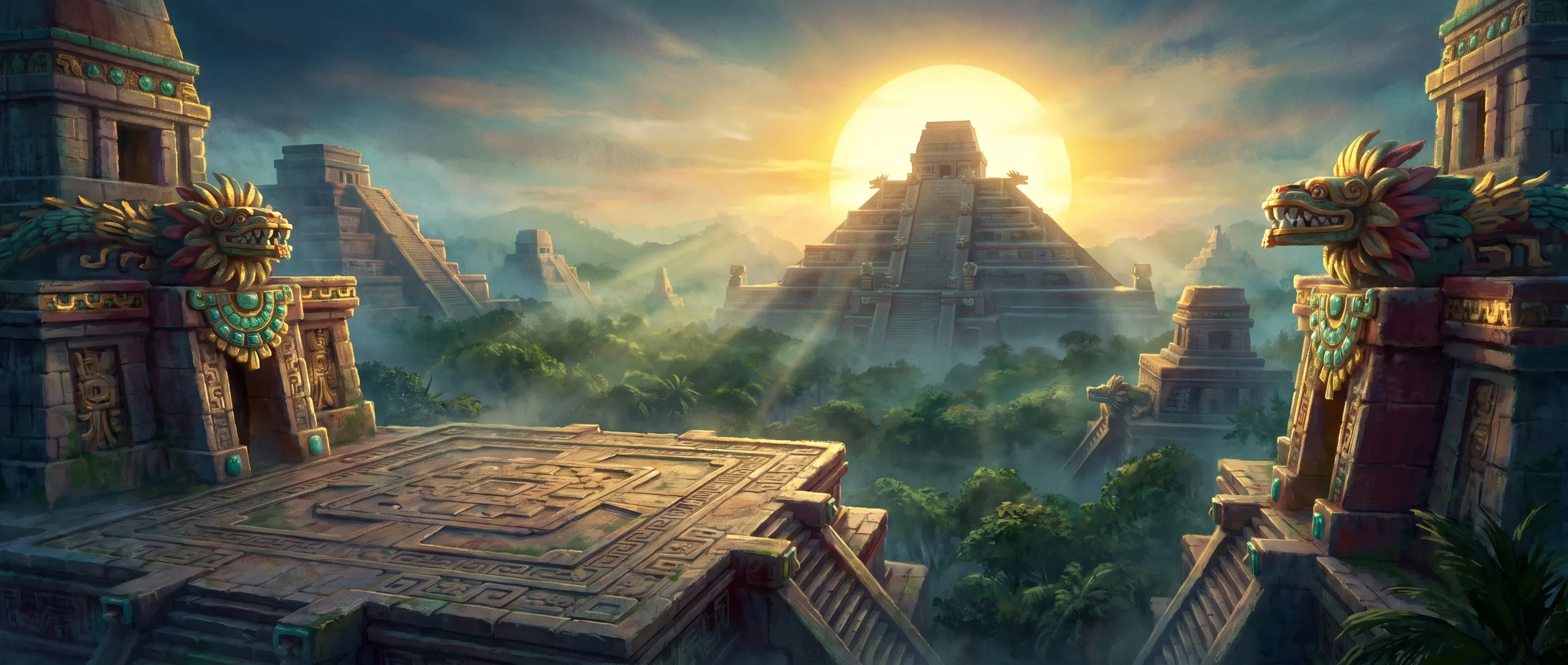
In MYTHENOR, this mythology is the Valley of the Fifth Sun, beneath the Sky of the Fifth Sun, woven from songs, codices and the calendar of days. The arena is a ballcourt between pyramids, and Itzel, guardian of the Serpent’s lineage, protects the thread of light atop the great pyramid. Kaelmyr’s silence is already showing: the sun rises later each day and the pages of the future have dawned blank. The 120 cards mix real gods, creatures and objects with the game’s own creations, always flagged in this codex.
A note on respect
Nahua peoples are alive: more than one and a half million people speak Nahuatl in Mexico today, and traditions such as the Day of the Dead, the temazcal, the use of copal, beliefs about the nahual and the chaneques, and milpa farming remain present. This codex treats those traditions with respect and in the present tense. Human sacrifice was part of Mexica religion and is described here factually, without sensationalism; in the game, a duel’s “offering” is only breath, and no one gets hurt. Nahuatl terms follow the spelling most common in the cited sources.
Sources
- Aztec Civilization — World History Encyclopedia — Mark Cartwright
- Aztec Pantheon — World History Encyclopedia — Mark Cartwright
- Florentine Codex: An Encyclopedia of Life in 16th-Century Mexico — World History Encyclopedia — Jordy Samuels
- Mitos de los orígenes en Mesoamérica (Arqueología Mexicana) — Miguel León-Portilla
- Sun Stone — World History Encyclopedia — Mark Cartwright
- Digital Florentine Codex (Historia general de las cosas de Nueva España) — Bernardino de Sahagún and Nahua collaborators; Getty Research Institute
The 120 cards
- Quetzalcóatl, the Feathered Serpent
- Tezcatlipoca, Lord of the Smoking Mirror
- Xiuhcóatl, the Primordial Fire Serpent
- Mictlantecuhtli, Sovereign of Mictlán
- Obsidian Serpent-Dragon
- Popocatépetl Volcano Dragon
- Jade Dragon of the Cenote
- Dragon of Tláloc's Storm
- Tonatiuh's Sun Dragon
- Tlaltecuhtli, the Earth's Maw
- Cloud Serpent
- Jade-Rattle Rattlesnake
- Lake Texcoco Serpent
- Young Feathered Serpent
- Turquoise Double-Headed Serpent
- Lesser Fire Serpent
- Mixcóatl, the Cloud Hunter
- Sun Hummingbird
- Canopy Quetzal
- Mictlán Messenger Owl
- Mountain Lightning Falcon
- Eagle of the Nopal Cactus
- Two-Headed King Vulture
- Ancestral Quetzal of the Sacred Plumes
- Hummingbird of the Reborn Warrior
- Apprentice Eagle Warrior
- Apprentice Jaguar Warrior
- Bearer of the New Fire
- Atlatl Spear-Thrower
- Otomí Shock Warrior
- Chimalli Shield Captain
- Shorn Cuachic Veteran
- Eagle Knight of the Sun
- The Eagle-Jaguar Order
- Xoloitzcuintle, the Hairless Hound
- Rabbit of the Moon
- Singing Coyote
- Jaguar of the Stone Temples
- Ahuízotl, the Lurker in the Waters
- Tepeyóllotl, Heart of the Mountain
- Centzon Tōtōchtin, the Four Hundred Rabbits
- Huehuecóyotl, the Old Coyote
- Caiman-Warrior of the Sacred Lake
- Coyote Warrior
- Mazatl, the Deer-Man
- Jaguar-Masked Champion
- Tzinacan, the Bat Warrior
- Jaguar Knight of the Night
- Nahual in Jaguar Form
- Mischievous Chaneque
- Young Maize Spirit
- Tlaloque, the Rain Dwarf
- Breath of Ehécatl
- Mocihuaquetzqui, the Valiant Woman
- The Tlaloque Break Their Jars
- Nanahuatzin the Humble
- Tecciztécatl the Proud
- Ehécatl, Lord of the Wind
- Chalchiuhtlicue, She of the Jade Skirt
- Xólotl, Guide of Mictlán
- Centéotl, the Young Maize God
- Nanahuatzin, the Fifth Sun
- Metztli, the Marked Moon
- Bone Walker of Mictlán
- Fallen Warrior of the Flowery Field
- Warden of the Apanohuaya River
- Obsidian-Wind Skeleton
- Crossroads Cihuateteo
- Tzitzimitl, Star Demon
- Mictecacíhuatl, Lady of the Dead
- Apprentice Priest of the Sun Temple
- Apprentice Nahualli
- Steam-Bath Healer
- Tlacatecolotl, the Owl-Man
- Reader of the Day-Count
- Sorcerer of the Smoking Mirror
- Awakened Chac Mool
- Sparking Obsidian Idol
- Walking Clay Brazier
- Atlantean of Tula
- Awakened Sun Stone
- Sacred Agave
- Monarch of Souls
- Living Cornfield
- Obsidian Scorpion
- Itzpapalotl, the Obsidian Butterfly
- Huitzilopochtli, Hummingbird of the South
- Tláloc, Lord of the Rain
- Cipactli, the Primordial Monster
- Coatlicue, She of the Serpent Skirt
- Chocolate of the Gods
- Sparks of the New Fire
- Huéhuetl War Drum
- Dance of the Plumes
- Eye of the Obsidian Mirror
- Copal Smoke
- The Five Empty Days
- Folded Codex of the Elders
- Mask of Xipe Tótec
- Gust of the Wind Serpent
- Sacred Obsidian Blade
- The End of the Fifth Sun
- Chimalli Shield Wall
- Stake Pit
- Scorpion's Sting
- The Smoking Mirror
- Shifting Chinampa
- Night Warriors' Ambush
- Pulque Stupor
- Mictlantecuhtli's Judgment
- Obsidian Macuahuitl
- Ceremonial Jaguar Pelt
- Quetzal-Feather Headdress
- Ritual Turquoise Mask
- Huitzilopochtli's Serpent Spear
- Templo Mayor at the Fifth Sun's Dawn
- Rite of the New Fire
- Rite of the Rain Jars
- Rite of the Primordial Sea
- Rite of the Serpent Skirt