Norse · No. 100
Seiðr Binding
Inspired by: Seiðr, the Norse trance magic, which according to the sagas could confuse minds and bend wills.
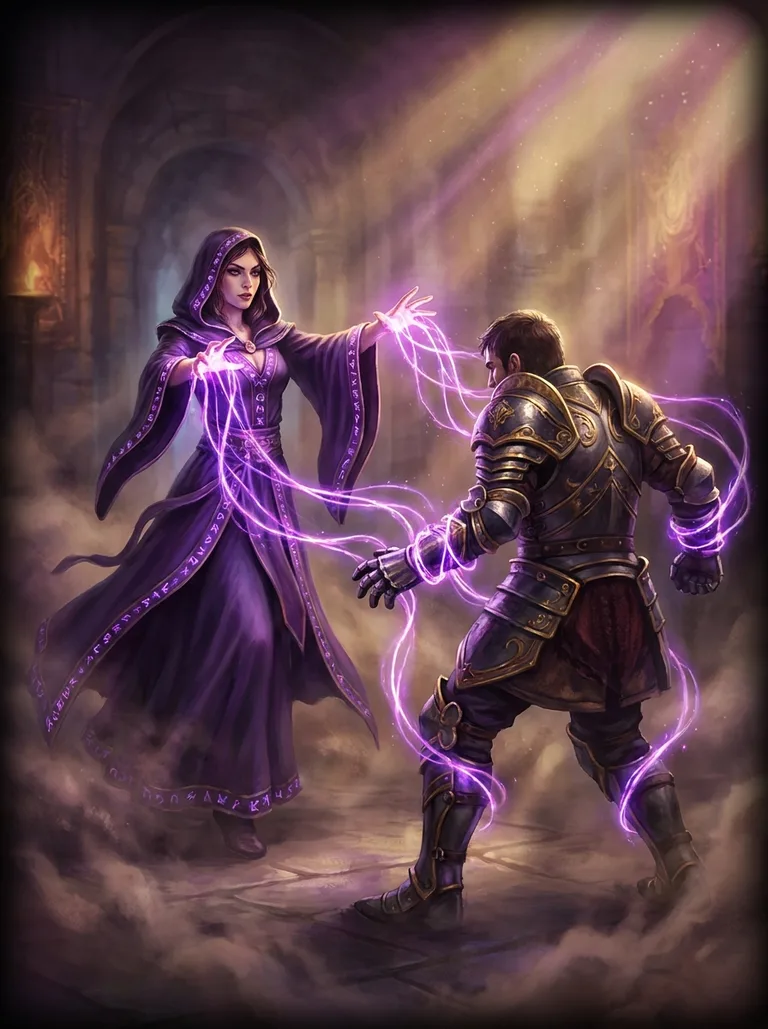
Chant the enemy's name three times, and they will obey once.
- Rarity
- Rare
- Category
- Spell
- Effect
- Take control of one of your opponent's monsters; it returns to its owner at the end of your turn.
The myth
Seiðr was a Viking Age magical practice performed through chanting and trance. Besides foretelling the future, it could, according to the sources, cause harm and sickness and unsettle a person's mind. In the Ynglinga saga, Snorri says Odin mastered this art and could use it to take wit or strength from some and give them to others. Freyja, said to have taught seiðr to the Æsir, was also its mistress. The sources name no spell called Seiðr Binding: this card's magic is a MYTHENOR creation inspired by that power to bend wills.
Why it has this power
A Rare spell that takes control of an opponent's monster for 1 turn. Chant the enemy's name three times and they will obey once, the card says. It is one of the fjord's most impactful spells: use the stolen monster to attack or as fusion material.
Did you know
In the Ynglinga saga, Snorri states that seiðr brought such shame on men that it was taught mainly to priestesses.
Connections
- In Thorvald Blackkeel's deck
Where to get it
- Daily Offering: 0.11% per pack (Rare 2.8% per card)
- Traveler's Pack: 0.69% per pack · 3.3% in the themed pack (Rare 7% per card)
- Bronze Reliquary: 0.78% per pack · 3.7% in the themed pack (Rare 8% per card)
- Silver Reliquary: 1.3% per pack · 6.2% in the themed pack (Rare 15% per card)
- Golden Reliquary: 2% per pack · 9.4% in the themed pack (Rare 25% per card)
- Daily Showcase: Shows up on about 1.5% of days · 400 gems
- Craft with card dust: 600 dust
- Crossing of Myths: Can be offered as a reward during a crossing (the card stays in the crossing deck).
Sources
- seid – i norrøn religion — Store norske leksikon
- Heimskringla: The Ynglinga Saga — Samuel Laing (trad./trans.)
- volve — Store norske leksikon