Egyptian · No. 094
Masks of the Beast-Gods
Inspired by: Egypt's animal-headed gods and the masks priests wore in rituals, such as those of Anubis.
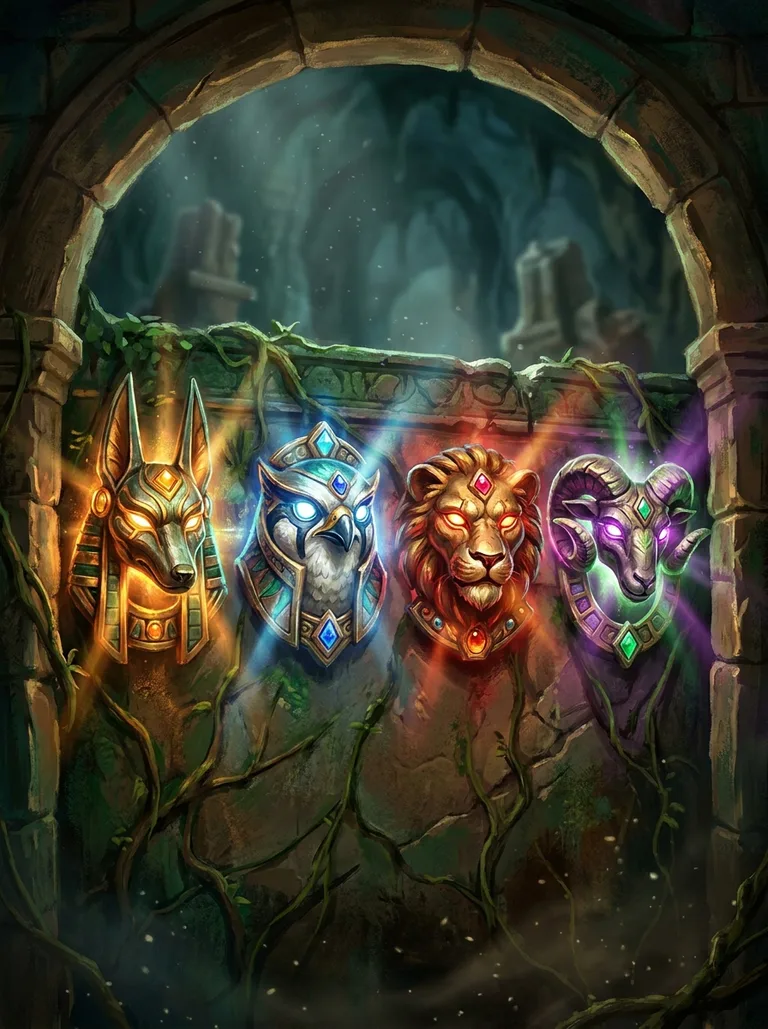
With the right mask, the warrior becomes the beast.
- Rarity
- Common
- Category
- Spell
- Effect
- Your Beast-Warrior monsters gain +600 ATK and DEF.
The myth
Egyptian art is famous for its gods with human bodies and animal heads: jackal-headed Anubis, falcon-headed Horus, lioness-headed Sekhmet, ibis-headed Thoth, crocodile-headed Sobek. The head showed each deity's nature and power. In rituals, priests could embody the gods: World History Encyclopedia notes that they wore wooden masks of Anubis in funerary rites. Masks of the Beast-Gods, a MYTHENOR spell, borrows that idea and turns the warrior into the very beast whose face he wears.
Why it has this power
A common boosting spell: all your Beast-Warrior monsters gain +600 ATK and DEF while they remain on the field. The Lioness-Headed Champion rises to 1900 ATK, and the Jackal Judge of the Scales reaches 3300. It is the heart of a beast-warrior deck.
Did you know
In funerary rites, priests wore Anubis masks to act in the god's role before the dead.
Connections
- In Scribe Nefru's deck
- In Captain Amunet's deck
- In High Priest Khaymet's deck
Where to get it
- Daily Offering: 0% per pack (Common 64% per card)
- Welcome Pack: 0.97% per pack (Common 70% per card)
- Traveler's Pack: 0.88% per pack · 5.2% in the themed pack (Common 64% per card)
- Bronze Reliquary: 0.86% per pack · 5.1% in the themed pack (Common 62% per card)
- Silver Reliquary: 0.67% per pack · 4% in the themed pack (Common 49% per card)
- Golden Reliquary: 0.46% per pack · 2.7% in the themed pack (Common 33% per card)
- Daily Showcase: Shows up on about 0.69% of days · 150 gold
- Craft with card dust: 40 dust
- Crossing of Myths: Can be offered as a reward during a crossing (the card stays in the crossing deck).
Sources
- Anubis — Joshua J. Mark (World History Encyclopedia)
- Ancient Egyptian religion: The gods — Encyclopaedia Britannica